
How to Find Who Owns a Gloucester County Property
Start with the county's Vision property search when you have a street address. The official assessor page confirms that lookups run by address or RPC. Beginning with a name instead? Treat it as a lead only. Common names, trusts, and business entities can return parcels with no connection to your target. So pin down the exact parcel before trusting a result. Note the RPC and the tax year. Then compare the owner name and legal description against the most recent instrument indexed by the Gloucester Circuit Court Clerk. One caution from the Clerk's office stands. A researcher must run the title search personally or hire a licensed attorney or title company. Records room staff can help you navigate, but they do not perform searches.
- Search the address or RPC in the Vision Gloucester Assessor Database and note the tax year and parcel identifier.
- Locate the latest deed in the Gloucester Circuit Court Clerk’s land records and compare its legal description.
- If the grantee is an entity, verify that entity separately through the Virginia State Corporation Commission’s official entity search; an entity listing alone does not prove ownership.
- Treat the assessment mailing address as a tax-notice destination, not a confirmed residence or permission to contact someone for unrelated purposes.
Vision is Gloucester’s public assessment search for owner, address, and RPC lookups. Open the Gloucester County Assessor Database.
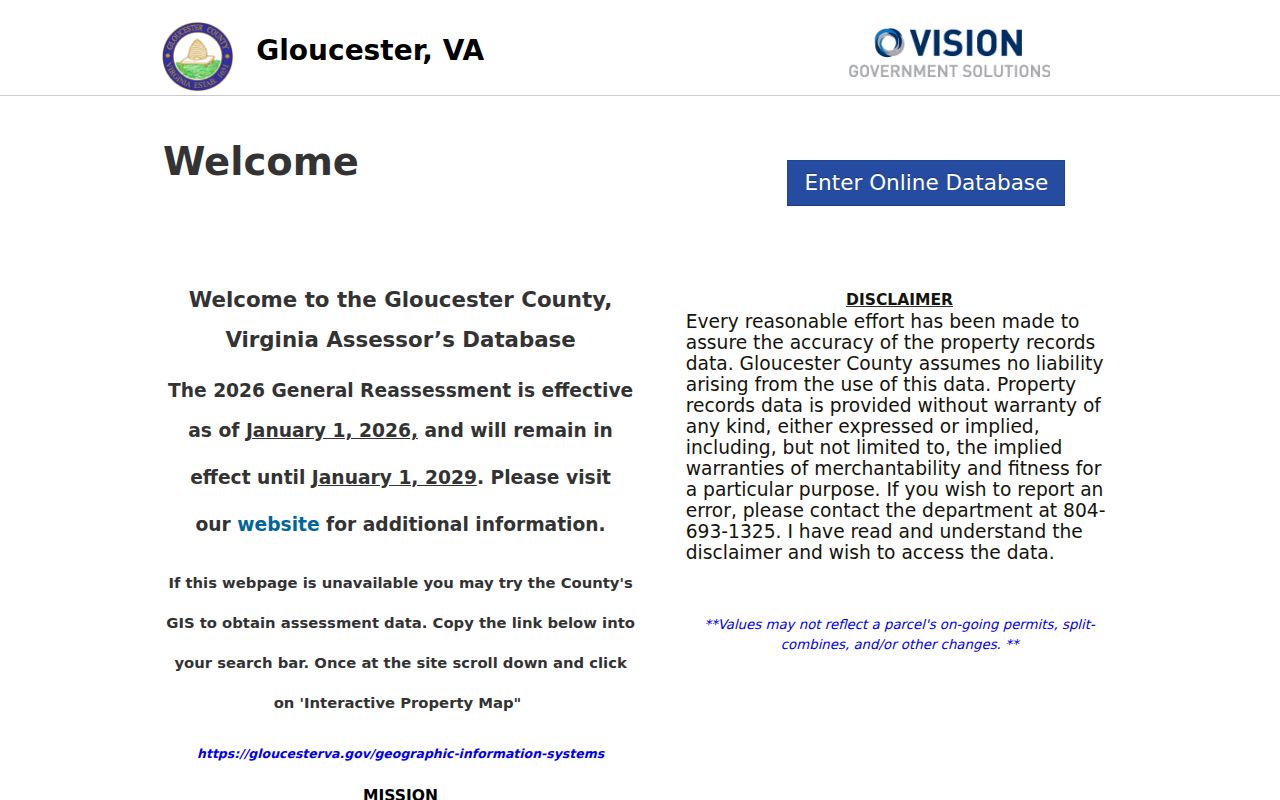
The public database's landing page states its own limits. Its disclaimer notes that assessments may not reflect ongoing permits, parcel splits, or combinations.
Where Gloucester County Owner Information Comes From
Several Gloucester County offices hold pieces of the ownership picture, and none of them alone tells the whole story. The Commissioner of the Revenue keeps assessment and land-book information. The Treasurer bills and collects the taxes. The Clerk records deeds and other land instruments. GIS maps where parcels sit. Each record serves a different purpose. A tax assessment is not a title opinion, a tax bill does not prove who lives somewhere, and a map line is not a deed. Before relying on any name, check the record type and its "as of" date.
| Source | Owner Info It Gives | Access |
|---|---|---|
| Commissioner / Vision | Assessment owner lookup by address or RPC; tax-year context | Online database at no charge according to the county materials |
| Circuit Court Clerk | Recorded deed and legal description; deeds of trust, releases and other instruments | Records room and available remote access, subject to local confirmation |
| Virginia SCC | Separate entity filings such as registered agent or annual-report data | Official state entity search; not proof an entity owns this parcel |
| County GIS | Parcel location and addressing context | Interactive map linked from the county GIS page; not the ownership system |
An owner of record can differ from the person at the door for several reasons. The owner may rent the place out. They may list a mailing address elsewhere. They may hold title through an entity, or have transferred the land after the assessment snapshot was taken. A dynamic parcel card can display fields that no public document confirms. So resist inferring a personal phone number or a resident's identity from a property search. For a transfer question, set the deed beside the assessor record. For an occupancy question, these property records are not an occupancy directory.
Confirm a Gloucester County Owner in the Recorded Deed
A deed answers a different question than the assessment roll. It documents a conveyance recorded in the land-record system. Find the latest instrument and read the grantor and grantee names. Then confirm the property description matches the parcel you searched. Watch for multiple lots conveyed together. Watch for a partial transfer or a boundary adjustment. Watch for a deed that refers to an earlier plat. A deed that conveys only an interest may not tell the full ownership story. Read earlier deeds or related instruments alongside it.
The Gloucester Circuit Court Clerk sits at 7400 Justice Drive, Room 327, Gloucester, Virginia 23061. The public records room generally welcomes visitors on weekdays from 8:00 a.m. to 4:15 p.m. Call 804-693-2502 to confirm access or ask about a record. Copies run $0.50 per copy or page, and certification costs $2 per document. Clerk personnel do not conduct title searches for visitors.
The Clerk explains its land-record resources and in-person research room. Review Gloucester Circuit Court Clerk resources.
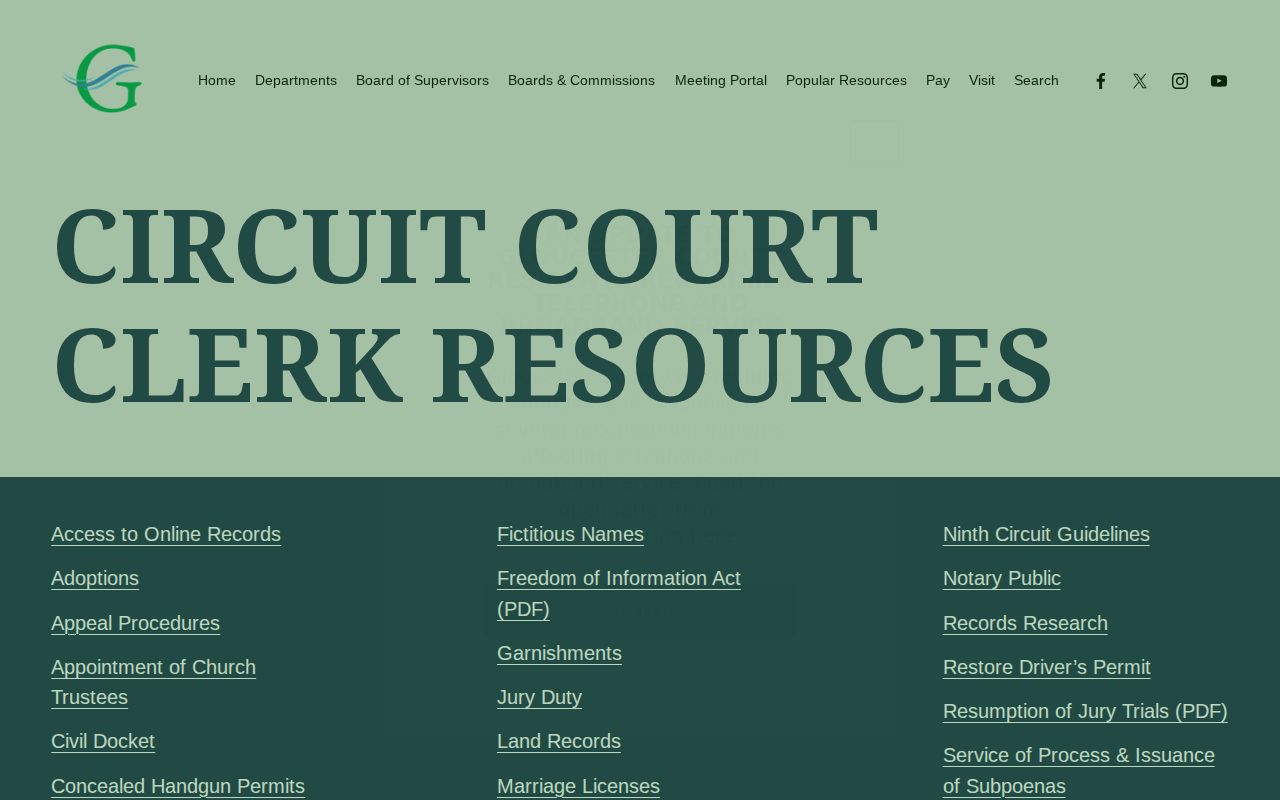
The live Clerk page carries the current instructions for requesting land records. That office resource page displays guidance and contacts rather than any individual owner result.
Recent Transfers and Gloucester County Assessment Timing
Timing matters when you weigh Gloucester County assessment data. The Vision database identifies a general reassessment effective January 1, 2026 through January 1, 2029. The county FAQ describes a biennial process. Parcels are assessed at 100 percent of fair market value. Published land books for 2020 through 2026 give January 1 snapshots of the tax roll. Assessment data can lag behind a permit. A parcel split, a combination, or a later change can have the same effect. An apparently stale name may simply call for a deed check. It is not proof that a transfer failed.
When two official records disagree, note each record's date and purpose. Ask the Commissioner of the Revenue whether the assessment account has been updated. Ask the Clerk how to locate the recorded conveyance. The Treasurer's bill reflects billing information and due dates, not a substitute chain of title. A land-book entry can establish the county's tax-roll position for that year. It will not resolve a title dispute by itself.
When One Gloucester County Property Has Several Identifiers
One street address does not always mean one piece of land. A parcel in Gloucester County may have been assembled from several tracts. A single deed can transfer more than one parcel at a time. Subdivisions and boundary-line adjustments complicate things further. They can create a new account or rewrite the legal description entirely. Each county tool also plays a different role. The GIS handles location and mapping. Vision handles assessment lookup. The recorded deed or plat carries the legal description. Keeping those roles straight saves confusion when you compare a property search with an actual transaction.
Gloucester addresses follow a rural E911 grid established in 1993. Numbers roughly track road frontage, and they may climb in the direction you least expect. Vacant land is a separate puzzle. It may carry no street address at all. For a tract like that, start with the RPC, the tax-map reference, lot and block, or the legal description. A nearby home's address makes a poor proxy.
For subdivision, boundary, or site-plan questions, Planning and GIS serve separate functions. A map helps you spot a location. When dimensions or boundary placement truly matter, though, only a recorded plat or a licensed survey will do.
Gloucester VADeed Alert and Owner-Name Changes
Virginia's VADeed Alert is a free, voluntary service. It notifies a subscriber after a deed is recorded. The deed is recorded under a name or parcel identifier they registered. Be clear about what it is not. It is not a title check, a filing lock, or a fraud-prevention shield. Enrollment does not reach backward in time. Each user may register up to ten name variations, with notice arriving only when future filings match. If an alert lands in your inbox, pull the recorded instrument itself. Call the Clerk if anything looks wrong.
Virginia’s judiciary provides the VADeed Alert enrollment service. Open VADeed Alert.
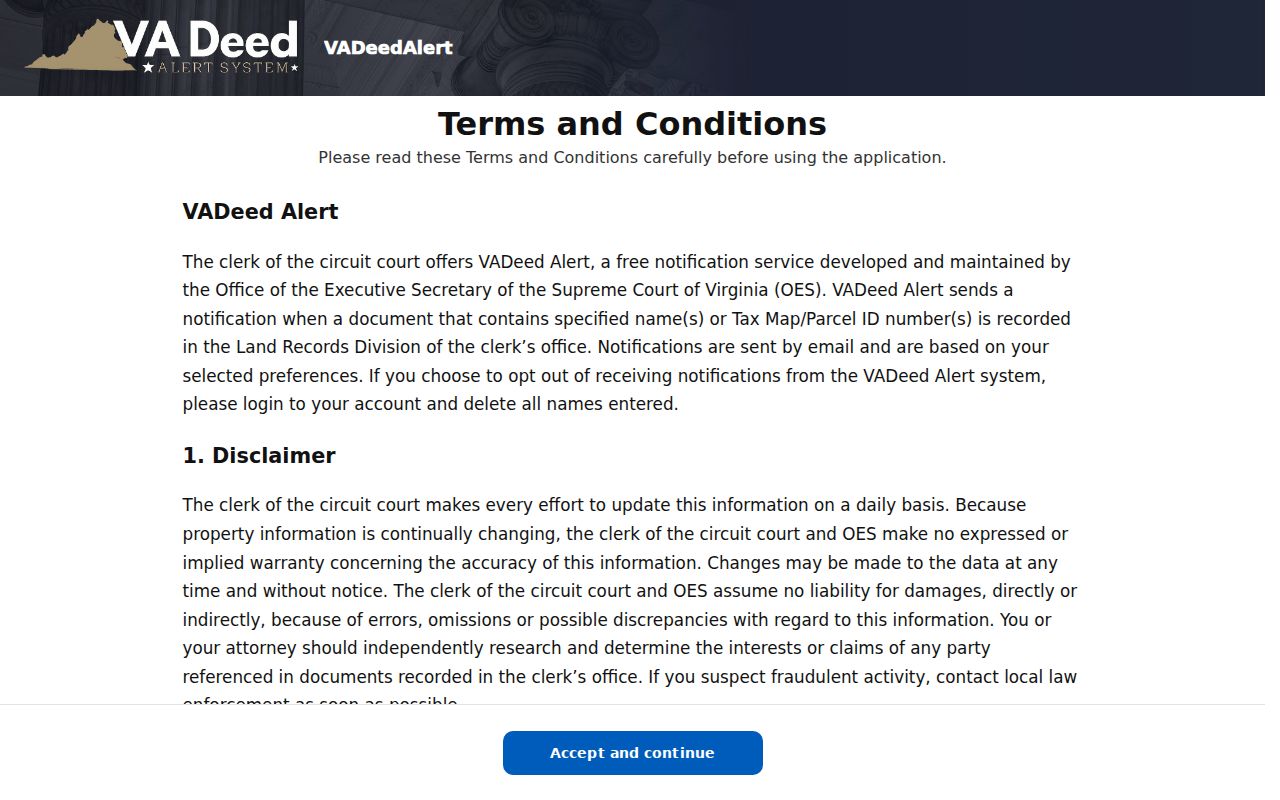
Remember what the alert actually is: a post-recording notice. An email is not a property history. Confirm the exact instrument with the Clerk before drawing conclusions.
Some Gloucester County residents need stronger address privacy. Virginia's Address Confidentiality Program sets its own eligibility and application rules in state law. It cannot erase recorded deeds. It also cannot convert public assessment data into a private title record. Anyone facing a genuine safety concern should consult the program's official guidance directly rather than leaning on a public owner search for protection.
The Virginia Code sets out the Address Confidentiality Program. Read the program statute.
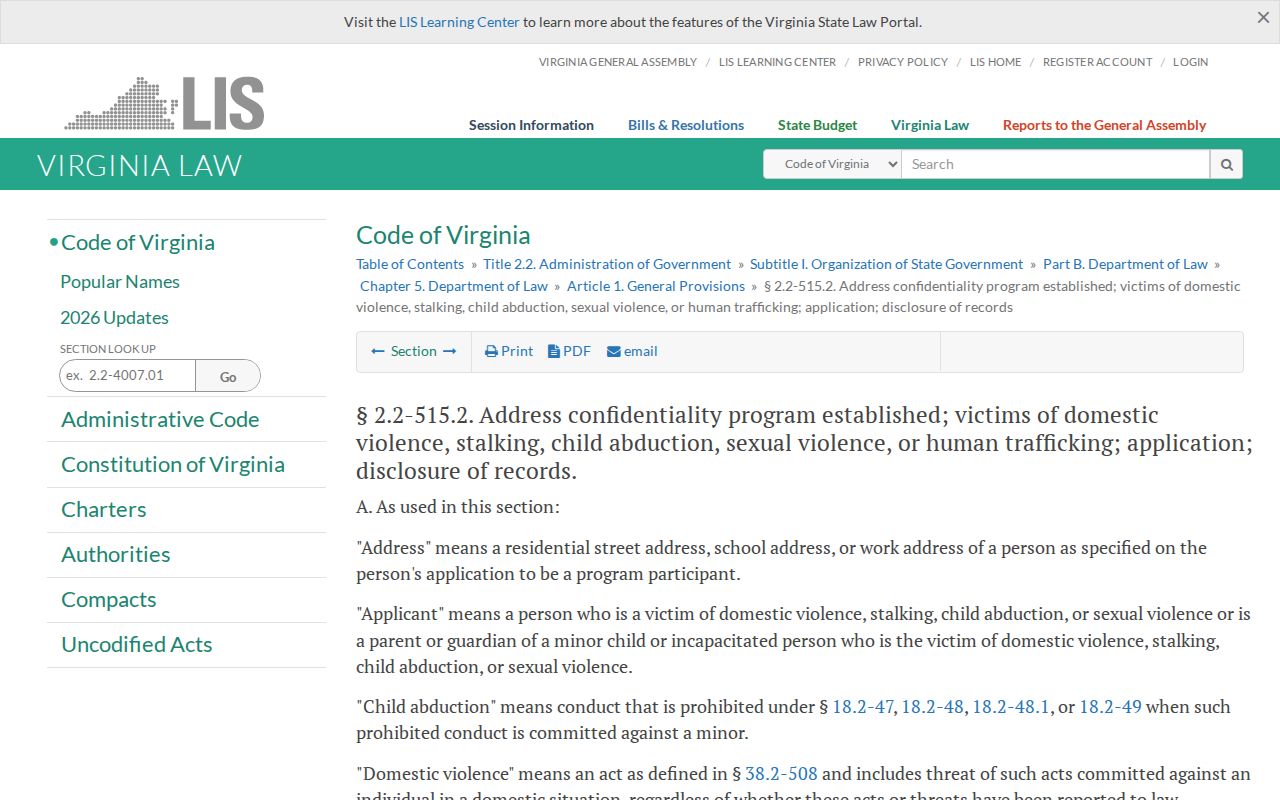
Eligibility, enrollment, and covered address uses all turn on the statute and the program's own instructions. The program never alters a deed's legal record.
What "Who Owns This Property" Cannot Tell You
A public record has real limits. It can name an owner of record, but it cannot tell you who lives there, who belongs to the household, or who holds beneficial interests behind an entity. Nor is it a title opinion. Liens, probate, easements, restrictions, and interests buried in prior instruments may call for a far broader search of Gloucester County property records. Virginia law generally opens government records to the public, though statutory privacy protections and safety programs can attach to particular records or particular people. For any legal conclusion, rely only on official sources.
Lawful use. Use an owner lookup for a legitimate property-record question. Virginia law prohibits stalking conduct, and this site’s public records are not permission to threaten, follow, intimidate, or harass anyone.