
Search Gloucester County Property Records by the Right Key
Pick your search key first. An address works well for a house, but vacant land may show none. An owner name can scatter across several parcels. It may also hide behind a trust, an estate, or a company. The RPC, Gloucester County's own parcel number, is the sturdiest bridge once you have it. The Vision assessor database supports lookup by address in its Property Lookup route. It also supports lookup by RPC. County materials describe owner, address, and RPC options too. Copy the parcel key straight from a land book. Do not guess its format.
Once the parcel is pinned down, take your question to the office that keeps that record. The Clerk holds recorded instruments. The Treasurer answers payment questions. GIS supplies the location reference. Assessment keeps the current value view. A hit in one system does not make the others agree on the same date. Treat a property search as a starting point. It settles nothing the way a title opinion or survey would.
- Enter the known street address or RPC in the Vision Gloucester Assessor Database and note the owner name and parcel key shown.
- Use the RPC and the owner’s name to locate the latest recorded deed through the Circuit Court Clerk’s land-record resources or available Secure Remote Access.
- Compare the annual land-book entry with the assessor view, then ask the Treasurer for a current balance or payment status.
- Open the county Interactive Property Map to orient the parcel and identify nearby roads or lots. Treat the mapped line as reference only.
- For a record that is not online, contact its custodian. The Clerk can provide copies but does not perform the title search.
The Three Gloucester County Property Records Offices
Few property questions stop at a single desk. Deeds and other recorded instruments start with the Circuit Court Clerk. Values and land-book entries belong to Real Estate Assessment. The Treasurer handles amounts due, installments, and delinquency. GIS finds the parcel and address, while Planning and Zoning keeps permit and subdivision review records.
Gloucester Circuit Court Clerk
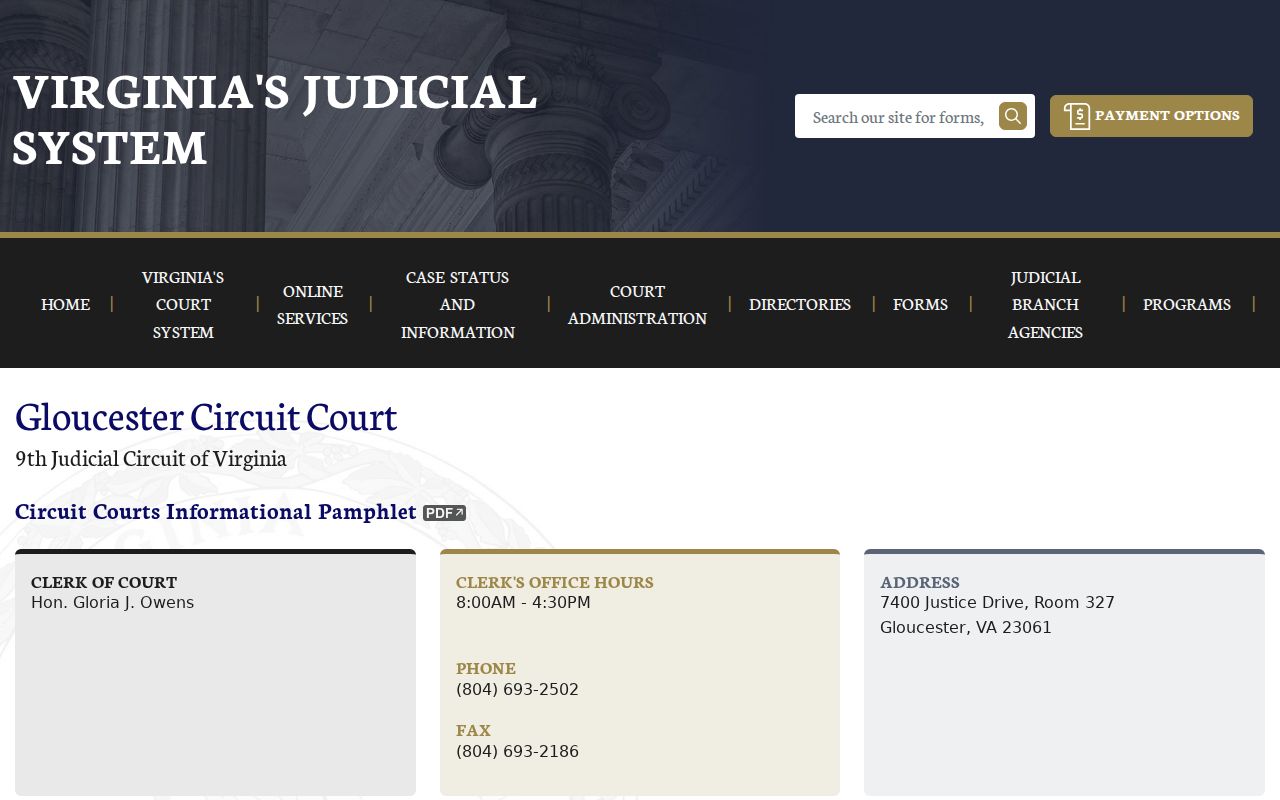
7400 Justice Drive, Room 327
Gloucester, VA 23061
804-693-2502
Real Estate Assessment
6489 Main Street, County Office Building Two
Gloucester, VA 23061
804-693-1325
Gloucester County Treasurer
6489 Main Street
Gloucester, VA 23061
804-693-2141
Which Gloucester County Property Records Answer Each Question
Gloucester County property records split across land records, assessment, tax collection, mapping, and permit review. A deed proves a recorded transfer. A deed of trust, lien, release, or easement marks a separate legal event. The land book lists each assessed parcel and its value for the tax year. The Treasurer's bill shows charges and payment status. Planning records document review or permits. No permit replaces a deed or a recorded plat.
| Record Type | What It Documents | Kept By | Access |
|---|---|---|---|
| Deeds and land instruments | Transfers, deeds of trust, liens, releases, easements, and wills listed by the Clerk | Circuit Court Clerk | Public records room; SRA availability must be confirmed |
| Assessment and land books | Owner and parcel entries, assessment values, and year-specific land-book rows | Commissioner of the Revenue | Vision database and searchable 2020-2026 PDFs |
| Tax bills and delinquencies | Installments, balances, paid status, and annual delinquent-list snapshots | Treasurer | County-linked Munis service and Treasurer contact |
| Parcels and plats | Map location, parcel shape, road context, subdivision lots, and legal description | GIS, Planning, Circuit Clerk | Interactive map for reference; recorded plat through custodian |
| Zoning and building review | Permit applications, proposed use, site plans, and subdivision review | Planning, Zoning, Building Inspection | County forms and custodian requests; no address-indexed permit portal was located |
Confirm a transfer with the latest deed. Compare a parcel's value against the annual book for a given year. The Treasurer's current balance may match neither figure. The fuller path through recorded transfers sits on the Gloucester County deed records page, while tax dates and relief details are gathered under property tax records. Both pages carry the record trail a single lookup misses.
Gloucester County’s 2026 Reassessment and Property Records
The 2026 General Reassessment took effect January 1, 2026. It runs through January 1, 2029. Gloucester County describes a biennial cycle and assesses real estate at 100 percent of fair market value under Virginia Code §58.1-3201. The Real Estate Assessment department uses mass appraisal. That method values groups of properties as of one date, with standard methods and statistical review. An assessment is therefore not a custom inspection or a promise about a sale price.
Vision cautions that its data may lag behind ongoing permits, parcel splits, combines, or new construction. A value can be useful and still need follow-up. The county's assessment FAQ notes when a completed improvement creates a supplemental bill for the months it existed. Keep the facts together for a property mid-change. The RPC, notice date, permit status, and deed reference all help Assessment explain a difference. One number alone rarely tells the whole story.
| Property Lookup mode | The county FAQ names Address and RPC in Vision’s lookup menu. |
|---|---|
| Address | Use a building’s situs address; vacant parcels may not have one. |
| RPC | Copy the county parcel key exactly from a land book or other record. |
| Owner search | Owner lookup is described, but the dynamic field behavior was not captured. |
Vision is the county’s public assessment database for address, owner, and RPC searches. Open the Gloucester County assessor database.
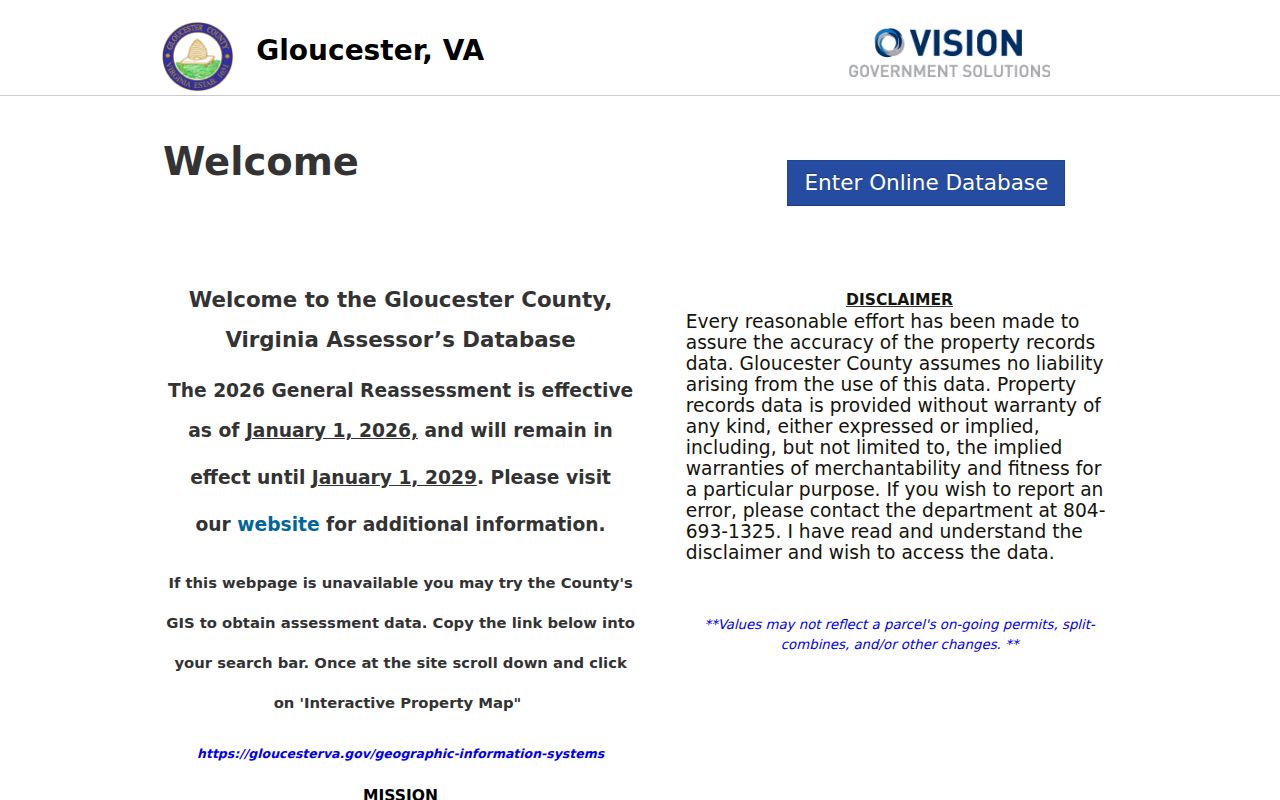
The reassessment notice sits on the database's landing page. Use the live parcel result for any account-specific value or owner of record lookup. The county assessment FAQ explains the local cycle and the valuation basis. It restates county instructions, not every live option.
The 1993 Gloucester County E911 Address Grid
Gloucester County's Enhanced 911 addressing began in 1993. The first number comes from a pre-ranged grid. Road frontage is then measured at roughly one address number for each ten feet. Two homes a hundred feet apart can sit about ten numbers apart. Numbers rise or fall with road direction. A rural sequence can look reversed from the point where a visitor enters the road.
The grid numbers buildings only. A wooded or farm parcel may carry no situs number at all, so the RPC and legal description serve better than any nearby house number. A new structure gets its address after a foundation inspection is flagged. GIS checks that report about twice a week. An address and Address Verification Letter may take five to ten days.
The county GIS page describes addressing and the Interactive Property Map. Orient the parcel in the viewer first. Then carry its identifier into the assessor or Clerk records.

An undeveloped parcel often has no street address. That is exactly why the RPC-based route, keyed to the 1993 Gloucester County E911 grid, is usually the cleanest search.
Gloucester County Land Books as Annual Property Records
The Commissioner of the Revenue posts searchable land-book PDFs for tax years 2020 through 2026. Each book is a January 1 snapshot. The 2024 book shows its use. One row can hold an owner or entity name, a mailing address, the RPC, and subdivision or lot wording. Remember what the land book is not. It is not a live conveyance index. A deed recorded after the book's date can be absent from that year's entry.
Match the book year to the question. Pull a newer book too when a sale, split, combine, or improvement may have changed the parcel. For the deed that transferred ownership, confirm the same RPC and legal description with the Circuit Court Clerk. Ask the Treasurer about any payment amount. A row helps you locate the right account. It cannot prove a tax bill was paid or that a title chain is complete.
The Real Estate Tax page links the county's books and exemption materials.
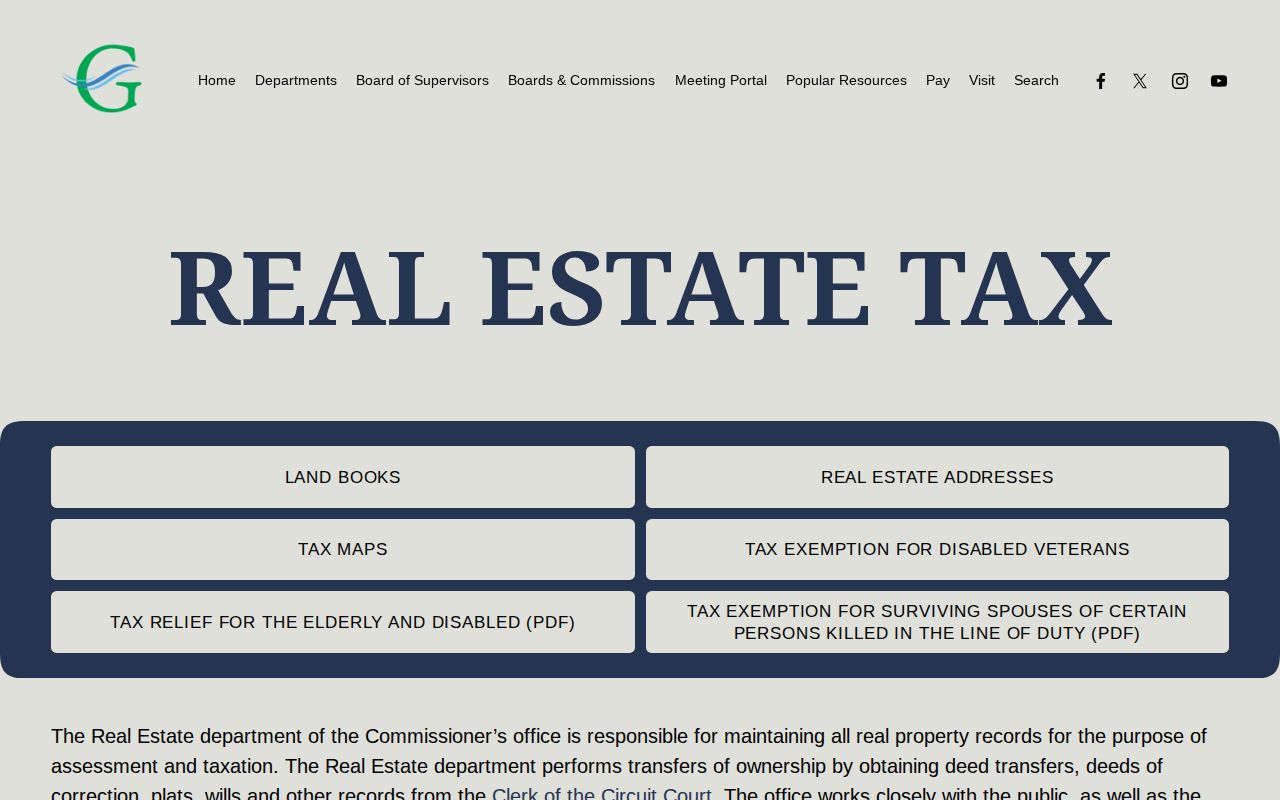
Carry both the RPC and the book year when contacting Assessment about an apparent difference.
Gloucester County Property Records, GIS Maps, and Plats
GIS is a locator layer. Gloucester County says its map is not survey grade and not the system of record for ownership or assessment. It connects roads, buildings, and parcel shapes. Layer menus and identify fields can vary, so do not assume a particular flood, zoning, or owner field appears in every view.
Recorded plats do different work. Within the legal record, they show lots, easements, dedications, and subdivision layout. Planning reviews subdivision plats and site plans. The Circuit Clerk holds the land-record instruments themselves. Tax maps have a cover, index, and section sheets. The county does not say a sheet number matches an RPC prefix, so read the labels and the index. A GIS line can guide a question, but only a surveyor resolves a boundary dispute.
Custom maps are available through GIS at $35 per hour plus materials, handled in the order received. The office says to allow lead time. A custom map stays reference material. The county would need to identify a separate official survey or record for anything more.
Gloucester County Property Tax Records and the 2026 Calendar
Gloucester County's 2026 real-estate rate is $0.583 per $100 of assessed value. Billing comes in two halves. First-half bills go out in early June. They are due June 30. Second-half bills follow in early November, due December 5. In 2026 that December deadline moves to December 7, because the fifth falls on a weekend. Late amounts draw a ten percent penalty plus ten percent annual interest under the county's stated rules.
Munis Self Service is the Treasurer's tax link. The county's pages do not show the live real-estate search controls or fields, so use the official link or call 804-693-2141 for a current balance. Never confuse the delinquent list with a payoff statement. The 2026 list is a snapshot of taxes assessed through December 31, 2025 that were still unpaid on June 30, 2026. It waits a full year for refresh.
The Treasurer's page posts current tax dates, links to service access, and explains the delinquent-list limits.

A listed parcel can be headed to sale. Confirm the status directly with the Treasurer and the court process custodian before drawing any conclusion.
Gloucester County Property Records at the Clerk’s Counter
The land records here are broad. The Circuit Court Clerk counts deeds, deeds of trust, financing statements, liens, releases, and wills among them. The public records room holds more. Civil and criminal files, marriage licenses, name-change cases, wills and probate, and fictitious-name certificates filed before 2020 all sit there. Some record groups date to 1859, though the county does not claim every series survives from that year or name an online deed-index start date.
Weekday hours run 8:00 a.m. to 4:15 p.m. Holiday closures also apply. Deputy clerks may help in the room, but they do not search title, and the Clerk points title research to a private researcher or a licensed attorney and title company. Copies cost $0.50 per copy or page. Certification adds $2 per document. Ask about remote access too. The county publishes no coverage details for local SRA image access or online cutoffs, so confirm the current route before trusting a screen image.
Begin with the Circuit Clerk's land-record resources for office instructions and record types.
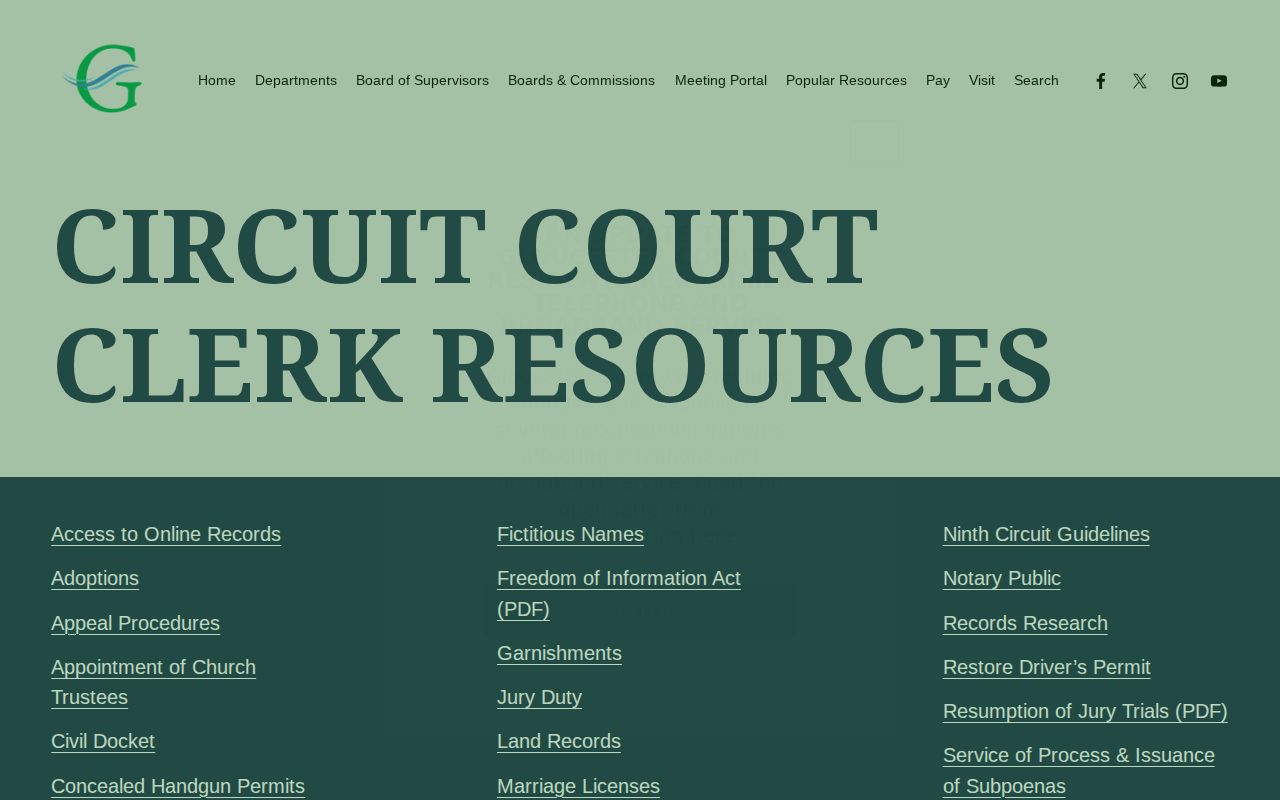
Bring specifics to the counter. Include an RPC, party name, date range, and instrument type whenever those details are known.
VADeed Alert and Gloucester County Deed Filings
Gloucester property owners can enroll in VADeed Alert, a free statewide service from Virginia. Enrollment covers up to ten name variations. A Tax Map Parcel ID can also be used for qualifying alerts. When a land-record filing matches, the service sends an email notice. That prompt gives an owner an early chance to catch a document they never expected. It also lets them check with the Clerk or a professional.
Enrollment is only the start. The service looks forward, never back. It does not block a document from being recorded in Gloucester County property records. It cannot cancel or undo an instrument either. Treat an alert as a reason to pull the actual filing. Do not treat it as proof of fraud. If a deed record looks suspicious, save the notification. Then ask the Clerk, law enforcement, counsel, or a title professional how to proceed. Enroll through the official VADeed Alert login. Gloucester's Clerk page carries the county's program notice.
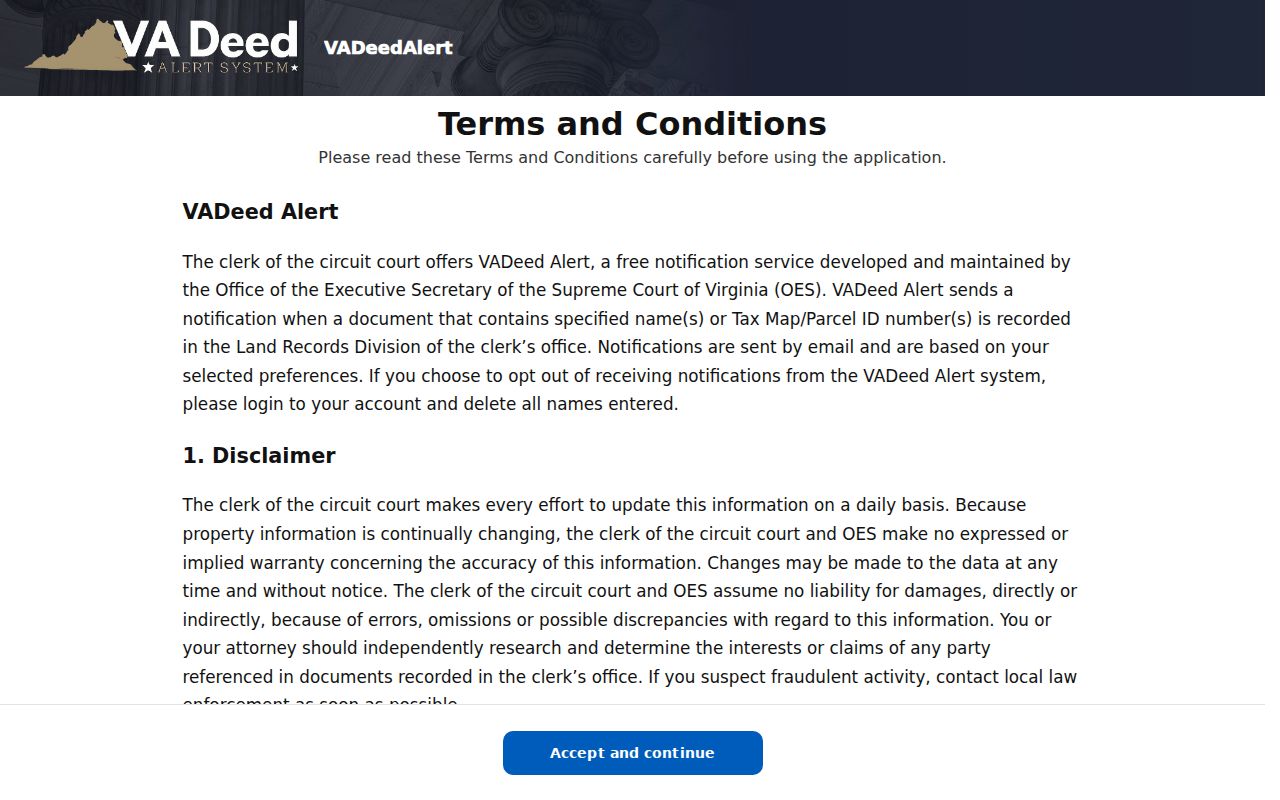
A name match alone proves little. Confirm the RPC and the legal description before tying the filing to the parcel, since Gloucester deed records turn on details, not names.
Older Gloucester County Property Records in the Virginia Room
Older Gloucester County property records have a second home at the library's Virginia Room. Its shelves hold land-tax runs from 1782 through 1861. It also holds personal-property tax lists from the same era. A land-tax entry can suggest an owner, acreage, or district. It can even show when a family first appears in the county's tax trail. But a tax line is not a deed. Attach one to a parcel only after checking the legal description. Check the deed book and any related plat too.
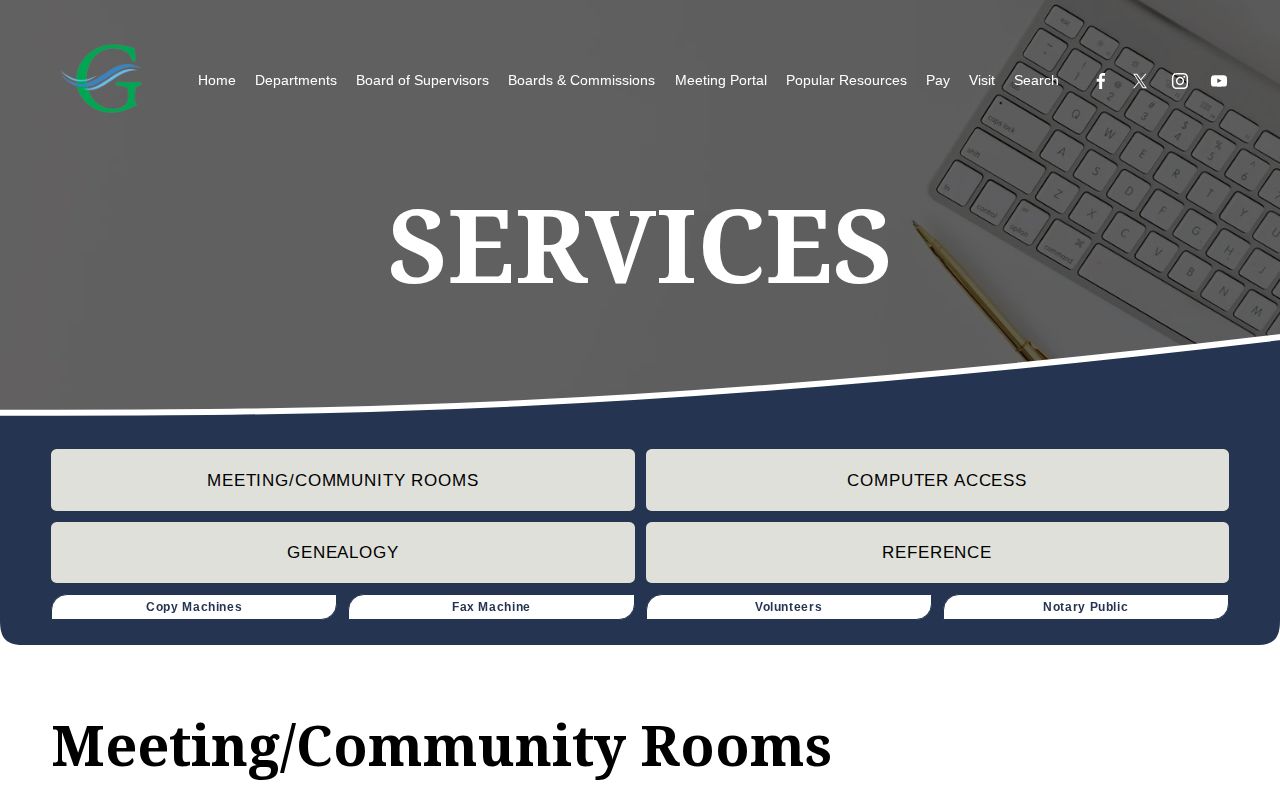
The room also holds federal census material for 1810 through 1920 plus newspaper microfilm. Gloucester-Mathews Gazette-Journal issues run from 1937 to the present. Gloucester Glo-Quips spans August 1, 1960 through December 15, 2005. Legal notices in those pages can point to estate sales, lost-deed notices, foreclosures, boundary disputes, or subdivisions. Copies from the reader-printer-scanner cost $0.15, separate from the Clerk's $0.50 charge. The Virginia Room page describes its local collections. The library can confirm the latest reel before a visit.
Pair the clue with the Clerk. An early chain of title holds up best when a tax-list hint and a clerk deed search agree, so treat neither source alone as final proof.
Gloucester County Land Records and Court Dockets
Circuit Court files can reveal a lot about a parcel's legal history. Foreclosure pleadings, lis pendens, quiet-title actions, partition suits, boundary disputes, judgment liens, and tax-sale proceedings all leave a trail in the docket. An entry may list a case number. It may also list the parties, the case type, or a hearing date. Depending on what the local system provides. Not every pleading or exhibit shows up, though. A docket hit alone does not prove a lien is still enforceable. Look for a satisfaction or release and confirm the file with the Clerk before drawing conclusions.
Virginia offers no statewide circuit-case search covering every locality. Turn to the Gloucester court page or call the Clerk when online coverage is unclear. A recorded land instrument may exist separately from any court docket. Federal cases run through PACER. That is a different court system entirely and not a county land-record index. The Gloucester Circuit Court page lists local contact details. It serves as the fallback for any docket question.
Some Gloucester County property records sit outside any public index. For those, send a Virginia FOIA request to the actual custodian, including a recorded plat citation (RPC) and a date range if you can.
Privacy Limits Around Gloucester County Property Records
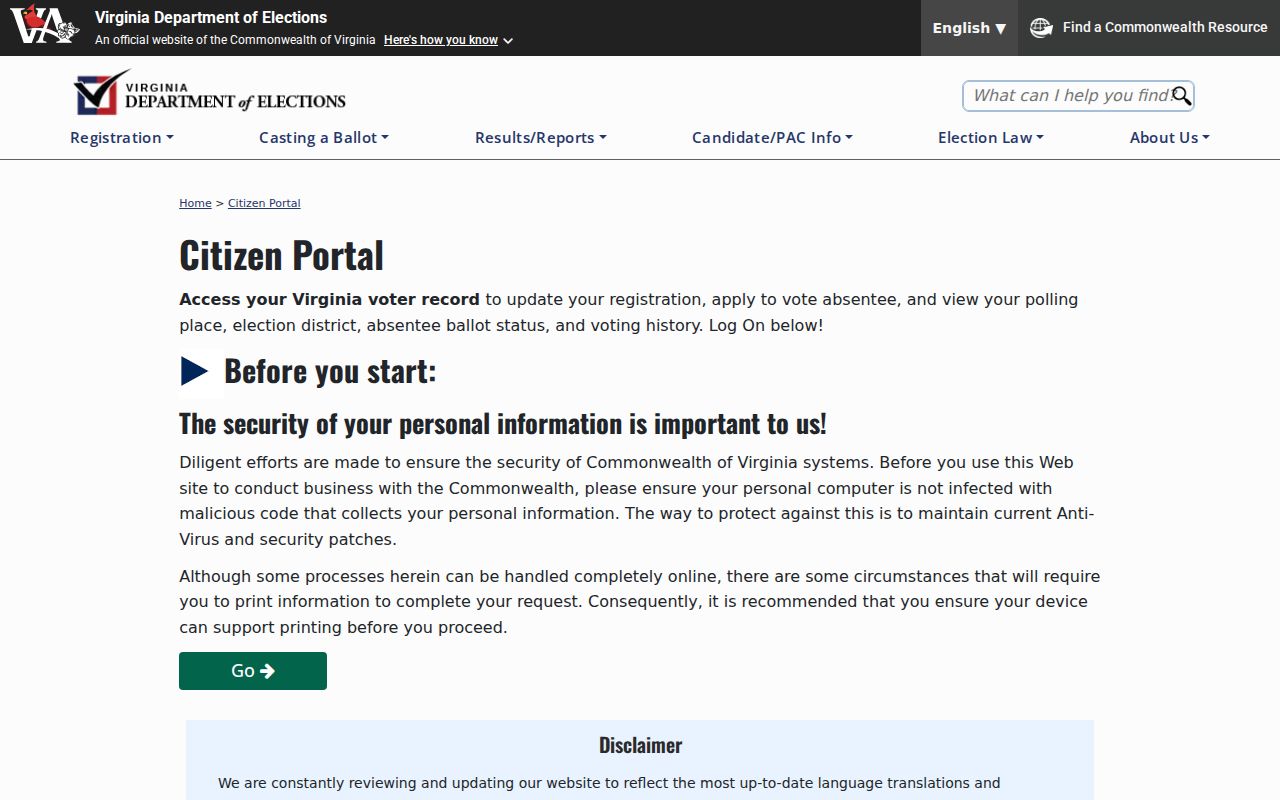
Virginia FOIA opens most public records unless an exemption applies. Access rules vary by record set. Voter-registration system data is not generally available through FOIA. The citizen portal only lets an individual check their own registration. Current birth records stay confidential for 100 years. Death, marriage, divorce, and annulment records generally become public after 25 years. Statutory exceptions apply. Keep in mind that an index is not the same as a certified certificate or a full court file.
Virginia's Address Confidentiality Program gives eligible survivors a designated mailing address through an approved victim-service route. It does not automatically erase every historic deed or tax entry tied to a parcel. Never reproduce Social Security numbers, bank details, sealed filings, or protected addresses. County FOIA requests can arrive by form, email, phone, mail, or electronic delivery. Constitutional-office records go straight to that office. Read the Virginia Address Confidentiality Program statute for eligibility and process. The county FOIA page explains where to send a local request.
The Virginia Department of Elections citizen portal provides an individual voter-registration lookup. Open the Virginia voter citizen portal.
A Gloucester County FOIA request can get pricey. Ask for an estimate before work begins, and request any non-exempt portions if part of a record is withheld.
What Gloucester County Property Records Can and Cannot Prove
A record proves what an office wrote down, nothing more. A deed shows who filed it. A tax roll shows what the assessor valued that year. A parcel number pins a lot on the Gloucester County map. A permit file shows a review that happened. None of that tells you who lives at an address. It does not tell you whether an index captured every interest, or where a disputed boundary truly runs. The Clerk's own guidance is blunt. Run your own title search, or bring in a licensed attorney or a title company.
Finding an owner of record does not make contact welcome. Use public data for lawful property research and civic purposes. Virginia law treats repeated conduct that instills fear of harm as stalking. Never use owner or mailing-address details to watch, pressure, or harass anyone. Boundary questions belong with a surveyor. Title questions belong with a professional who can read the full chain of deeds.
Lawful use. Use public records for a property question, not to target a person. A deed search is not title insurance, and a mapped parcel is not a survey.